Damp and Condensation Mould
Your home should feel safe and comfortable, so if you tell us about damp or condensation mould, we’ll listen and take action.
If it isn’t dealt with it can damage the structure of your home, so it’s important to let us know as soon as you notice a problem.
This page explains how you can report any concerns you have, along with useful guidance.

What is damp, condensation and mould?
Moisture can build up quickly in rooms like kitchens and bathrooms, and condensation is more common in colder areas of the home that aren’t heated regularly. Our guides linked below explain the difference between damp, condensation and mould and share simple steps you can take to reduce moisture, improve ventilation and lower the risk of mould in the areas most affected.


How to report damp and mould
If you have any concerns about damp or condensation mould in your home, please report it to us.
The quickest and easiest way to do this is by calling our Customer Hub on 0333 200 7304.

Watch our handy video which explains more!
This short video explains damp, condensation and mould in a clear, easy way. It shows how everyday things like cooking, showering and drying clothes put water into the air, and how that warm, wet air can turn into tiny water drops when it hits a cold wall or window. If those drops stay, mould can start to grow. It also explains that some damp comes from leaks or water getting in from outside.
Watch the video below to find out more and the simple steps you can take to can help reduce damp and condensation mould in your home.
What is the difference between damp and condensation mould?
In most cases, mould growth is a result of condensation, though it can be made worse by damp.
While condensation cannot be completely cured, it can be managed to minimise its impact.
Damp is a more serious issue and can be resolved through appropriate remedial action, which is our responsibility.
- Condensation happens when humid air meets a cold surface.
- When these tiny water droplets reach a cold surface, they clump together.
- 'Dew point' is when they form visible drops, and condensation forms on the surface.
The more moisture there is in the air the more likely it is you will get condensation.
Condensation can lead to mould if left for too long.
Mould spores are always present in the air, both inside and outside your home. For mould to grow, it needs three things: air, moisture and something to feed on. Air and small amounts of dust or organic matter (food) are always present in your home, so moisture is usually the main reason mould develops indoors. Therefore, reducing moisture levels in your home is the best way to prevent mould growth.
Below: Mould growing.

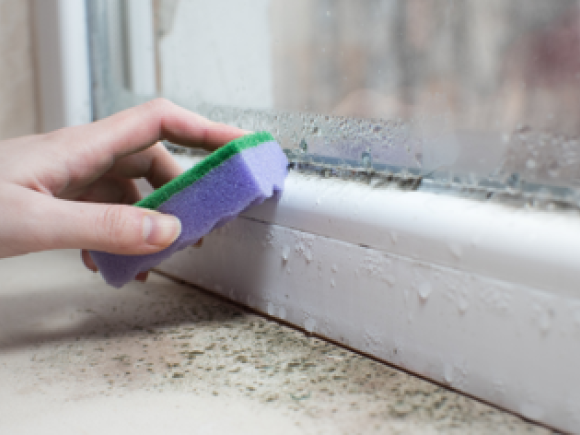
Below: Condensation on the glass running onto the sill.
Below: The condensation needs to be removed/reduced daily in order to reduce the possibility of Mould forming.
This can happen in any home and is not purely a social housing issue.
Other conditions that increase the risk of condensation
- Inadequate ventilation - windows that don't open, broken or ineffective extraction fans.
- A lack of heating - not heating the house which may be a result of fuel poverty or a broken appliance
- Leaking pipework – the water will evaporate and add to the moisture in the air
- Defective insulation – poorly fitted loft insulation will leave cold spots on the ceilings
- Poor building design – bathrooms with 3 external walls will have greater heat losses and will need more ventilation
- Over filled rooms – restricts ventilation as air will not circulate around the items
- Busy household – each person adds around four pints of moisture to the air every day through everyday activities like cooking, washing and even breathing. The more people living in a home, the more moisture is created — so good ventilation and regular airflow are especially important.
Dampness can enter the building through the foundation walls from the wet ground. Cracks on the surface of walls, slabs, terraces, roofs, etc., allow the entry of moisture during rainy weather seasons.
There are two main types of damp - Rising damp and penetrating damp, both of which can contribute to condensation mould.
Rising damp
This type of damp is caused when water in the ground or a surface level rises through the structure of the property as a result of the failure, breach or lack of a moisture control barrier.
These are namely the damp proof membrane, a solid floor or the damp proof course in a ground floor wall.
This is typically what you will see on the inside: rising damp coming up through the walls.
Below: Rising damp coming through the floor will likely lift vinyl, tiles and soft furnishings may suffer from mould.
Rising Damp - typically this is what you would see on the outside of the property: Damp brickwork above the damp proof course level which should be 150mm or 2 courses of brickwork above the external ground level.
Penetrating damp
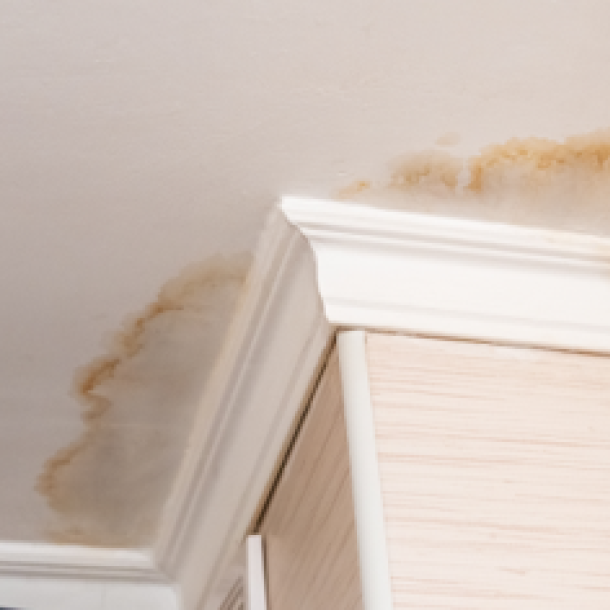
Penetrating damp is caused when there are defects in the structure that allow water to pass through the fabric of the building. This can be a leak from a pipe internally or externally, a leaking roof, damaged brickwork or poorly sealed windows and doors.
Below: Typically, penetrating damp will look like this internally: penetrating damp on a chimney breast.
Below: Penetrating damp through a leaking roof.
Below: This is what you would see on the outside that could cause penetrating damp
Below:Blocked guttering overflowing roof:
Below: Cracked and damaged rendering:
How to prevent damp and mould in your home
The most effective way is to reduce moisture and condensation through heating, ventilation and wiping away condensation from surfaces. We have practical, room-by-room advice on our How to prevent damp and condensation mould page.


